Search Results
Search Results
Title Results
Your search returned 886 Titles

Sister Suzie Cinema
John Sanborn in collaboration with Lee Breuer and Bob Telson.
1985, 22:33 min, color, sound
A synthesis of video and musical theater, Sister Suzie Cinema is a "doo-wop opera fantasy" about the allure of the movies. This collaboration with theater director/writer/actor Lee Breuer — founding director of the experimental Mabou Mines theater group — and musician Bob Telson features the...
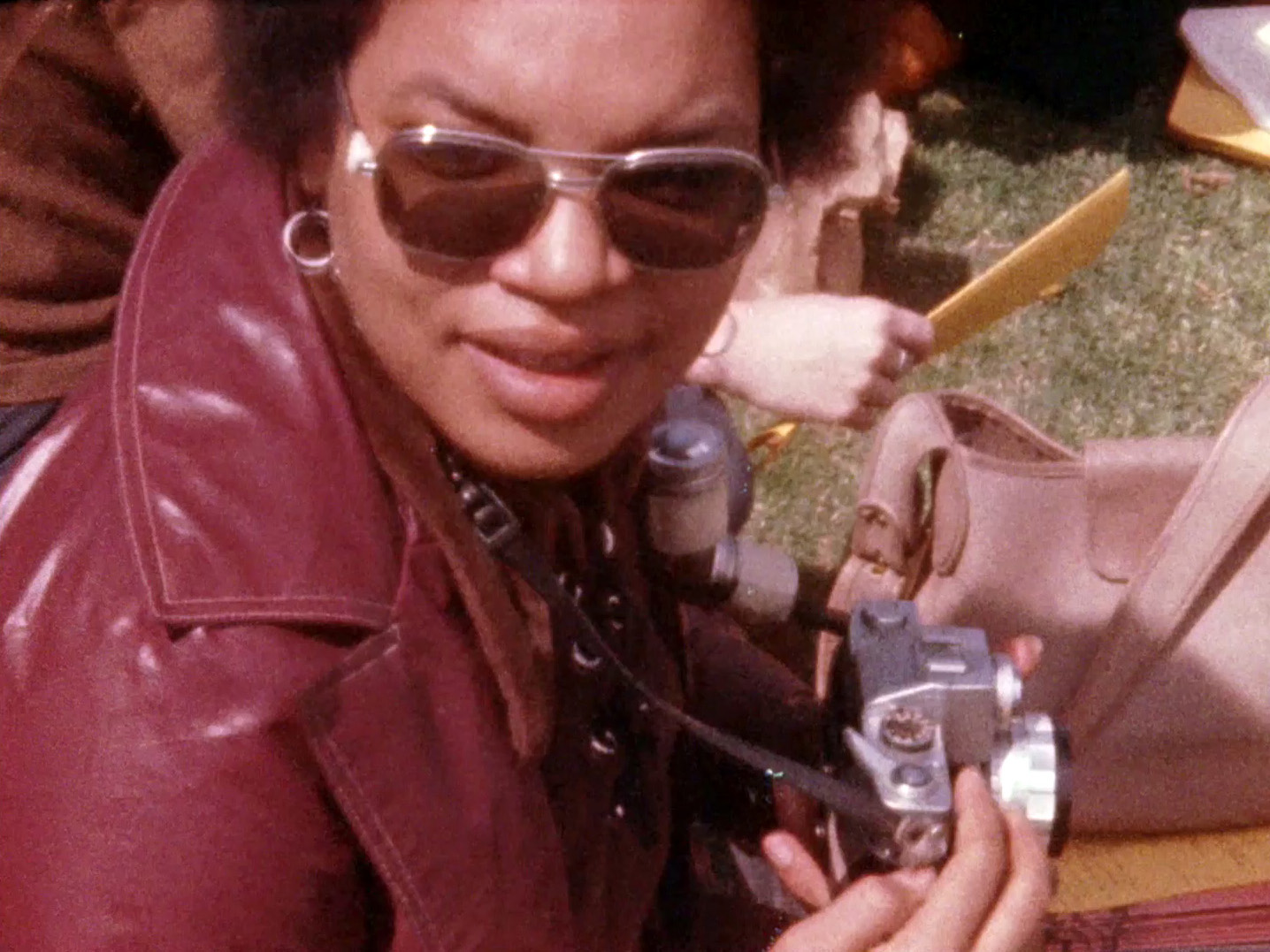
Combining perhaps the only footage from the first Women’s International Day march in San Francisco and rare footage of the second National Lesbian Conference at UCLA, Sisters! is a joyous and vital landmark in feminist, queer, and lesbian filmmaking.

Six Colorful Inside Jobs is one of a series of films that Baldessari produced in the 1970s, which are newly available through EAI. Seen from a bird's eye view, a figure paints the walls and floor of a windowless room six times in six days, using each of the primary and secondary colors.


Slogans is a visual deconstruction of advertising slogans, a literal and metaphorical illustration of the disintegration and loss of meaning of information in the contemporary "media landscape." Appropriating text from a series of familiar print advertisements — "Choose Your Weapon," "Play to...

A fixed camera turned on its side records Nauman repeating for nearly an hour a laborious sequence of body movements inspired by passages in works by Samuel Beckett that describe similarly repetitive and meaningless activities. Hands clasped behind his back, he kicks one leg up at a right angle...

"I first heard of AIDS in 1985 when I was teaching at Columbia College in Chicago. I noticed the strange and inflammatory articles in the newspapers and I asked my students to collect hysteric headlines for me. And so I began my work on Snow Job: The Media Hysteria of AIDS. I examined the public ignorance, stigmatization, and just plain wrong attitudes towards this new illness. By making a snow storm of newspaper clippings I could show what a 'snow job' the media was making." — Barbara Hammer

Snowflake is one of more than a dozen newly restored works by Muntadas, including early media interventions and works produced for television, which were recently made available.

This is a newly restored version of documentation of the 1967 group performance Snows, which was built out of Schneemann's outrage and sorrows over the atrocities of the Vietnam War. In an ethereal stage environment combining colored light panels, film projection, torn collage, hanging sacks of colored water, "snow," crusted branches, rope, foil and foam, an audience-activated electronic switching system controlled elements of the performance/installation.

Jenkins’ music video for his conceptual art band Othervisions offers strategies for keeping one’s head above water amid tumult. Glowing natural scenes—a bubbling stream, spring florals—juxtapose with media clips testifying to widespread global violence and the rise of American neoconservatism....